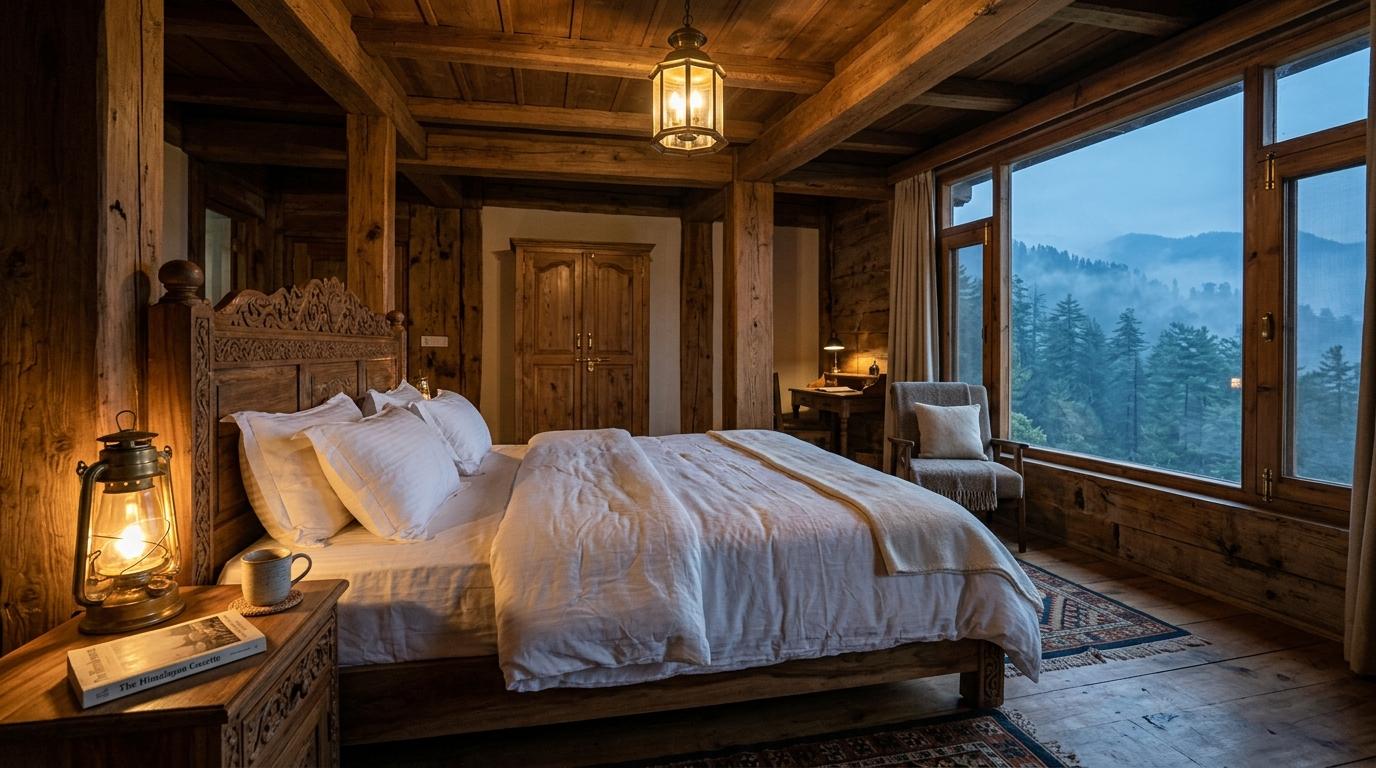
Architectural StudyKATH-KUNI · RUMSU · 2,180M

Six materials.
One quiet house above the road.

House of Hulda was built using the ancient kath-kuni tradition of the Western Himalayas. No Portland cement. No steel rebar. Only dry-stone, deodar timber, hand-loomed wool, and the thermal wisdom of five hundred years of mountain building.

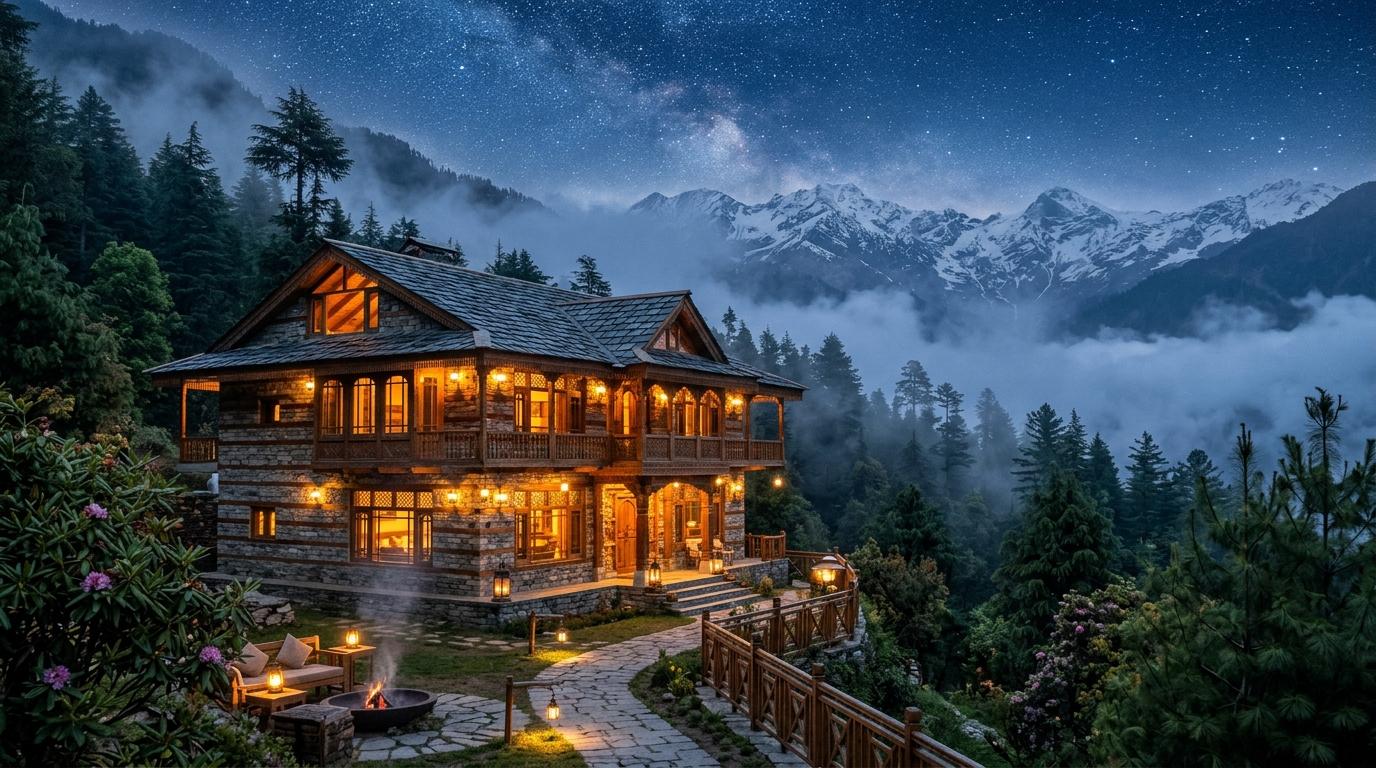
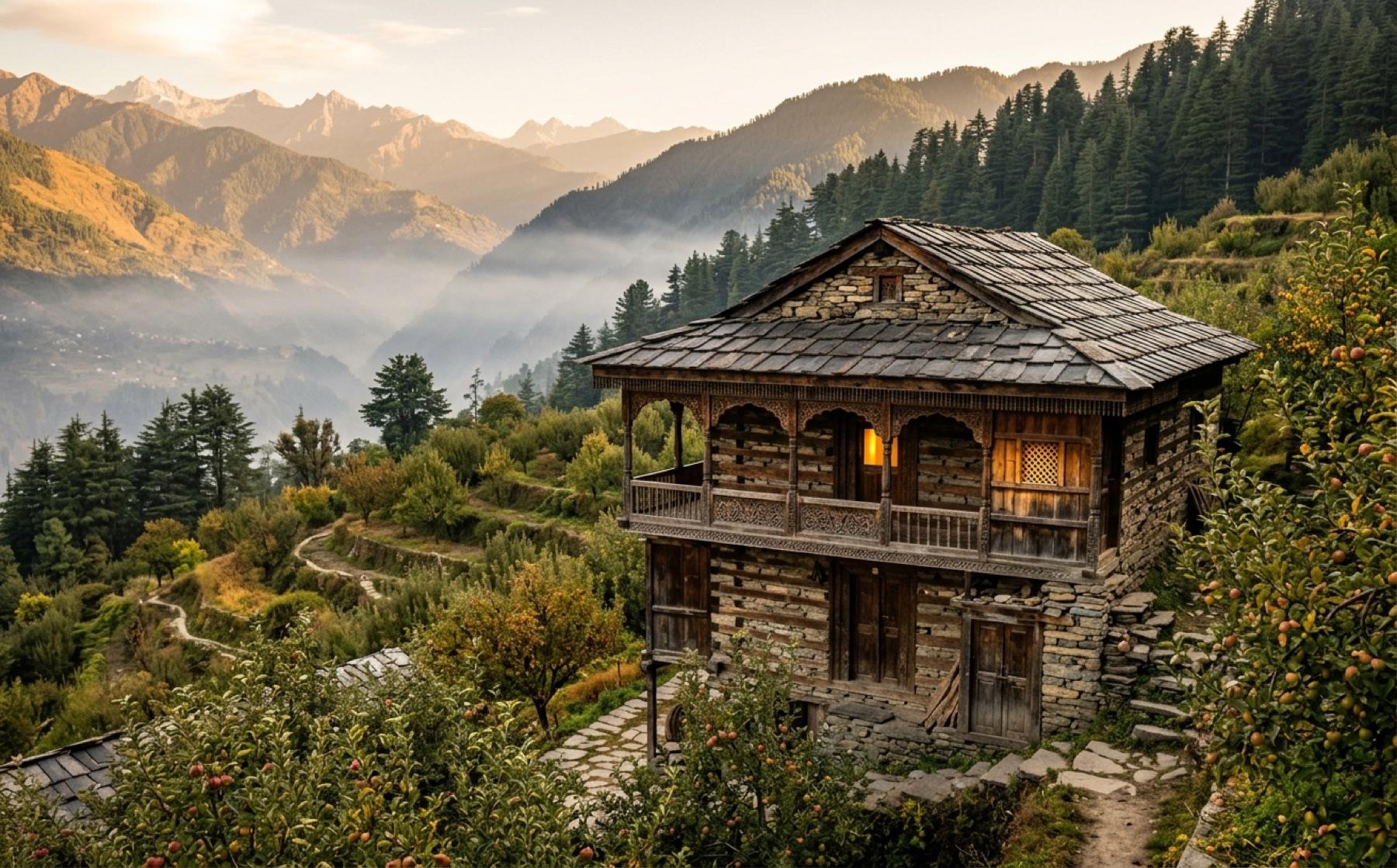
House of Hulda courtyard at dusk
HOUSE OF HULDA · COURTYARD ELEVATION2,180 METRES ELEVATION
Tradition
Kath-Kuni
Fasteners
Zero Iron Nails
Wall Thickness
600mm Dry Stone
Seismic Behavior
Elastic Friction Joint
Deodar
Aged deodar grain, hand-planed and oiled with cold-pressed walnut oil.
01Cedrus deodara · Timber of the Gods

Deodar

A tree that has weathered centuries before becoming a beam.

In the Kullu valley, deodar is not treated as mere timber; it is revered as devdaru, the wood of the gods. The beams carrying House of Hulda were sourced from mature, naturally fallen logs.

The wood breathes with the mountain humidity. As winter sets in and temperatures dip below freezing, the deodar contracts tightly around the stones, locking the structure against Himalayan blizzards. In warm weather, it releases a subtle, grounding fragrance that perfumes every room.
OriginFallen windfall from upper Naggar forests
PropertyNatural oleoresin, fungal and pest resistant
AromaWarm aromatic cedar note in dry heat
Stone
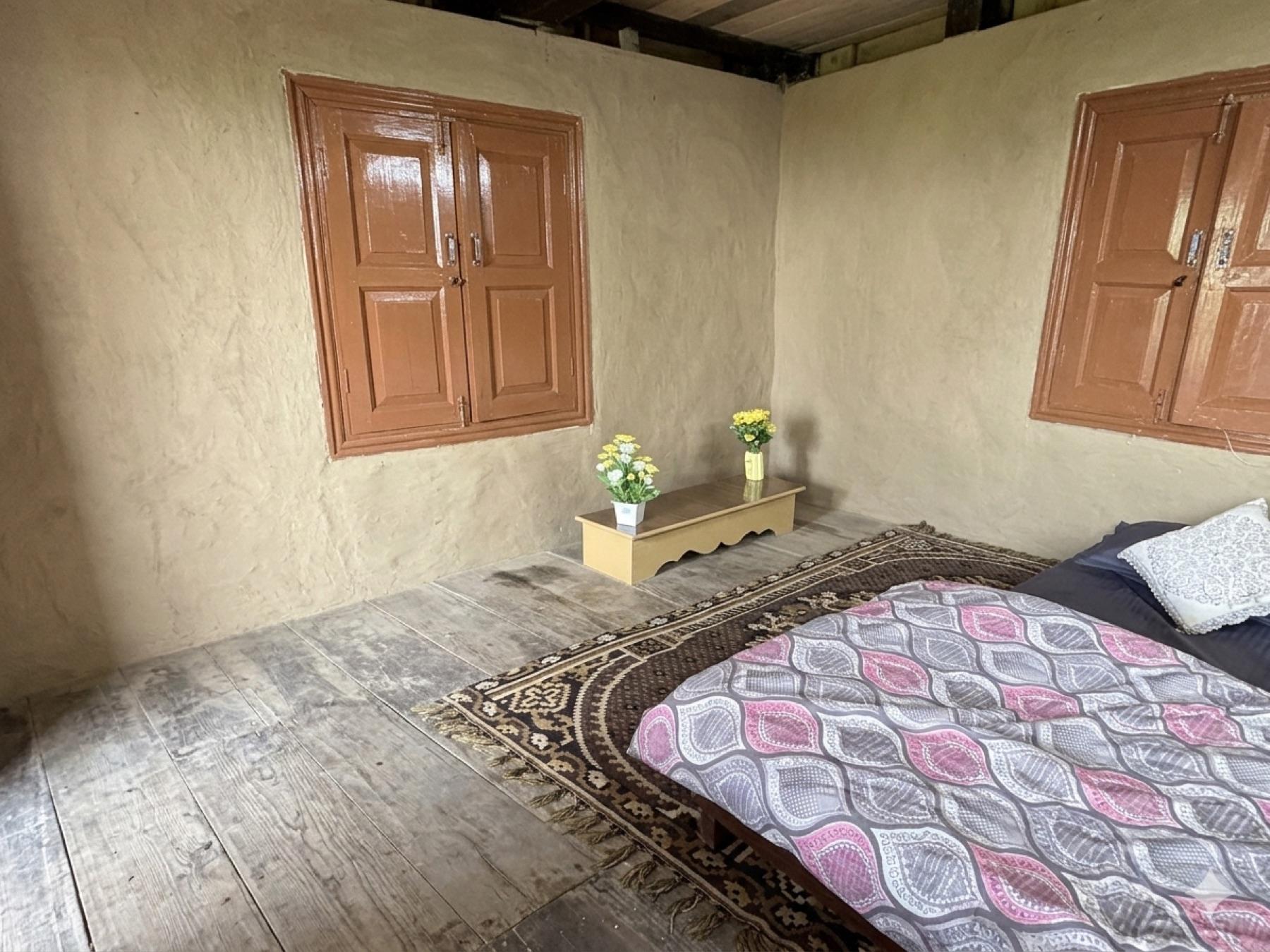
Dry-stone interior wall hand-plastered with clay, straw, and cow-dung wash.
02Metamorphic Slate & River Rock

Stone

The immense thermal sponge of the foundation.

Every stone was split by hand along its natural cleavage planes. The lower plinth of House of Hulda is built entirely of dry stone masonry—no cement, no slurry, no modern adhesives.

The massive two-foot-thick walls act as a natural thermal battery. During the bright, clear Himalayan days, the dark slate absorbs solar radiation. Long after the sun dips behind the ridge at 17:00, the stones gently release their stored warmth into the living quarters.

MasonryHand-dressed metamorphic stone
Thermal MassRetains daytime heat for 10–14 hours
FoundationDirectly anchored into hillside bedrock
Kath-kuni
The corner joinery of House of Hulda at golden hour, showing alternating cedar and stone.
03Interlocking Corner Architecture

Kath-kuni

Built without iron nails to dance with earthquakes.

Kath-kuni literally translates to 'wood corner' (kath = wood, kuni = corner). It is the indigenous earthquake-resistant vernacular architecture that has kept Kullu's temples and homesteads standing through centuries of tectonic shifts.

Two parallel wooden beams are laid horizontally, followed by cross-beams that interlock at right angles using lap joints. The empty cavities are hand-packed with stone rubble. Because no rigid mortar is used, the entire building acts like an elastic basket during tremors, dissipating kinetic energy harmlessly through friction.

TechniqueAlternating double-timber courses with stone infill
FastenersWooden dowels (maan) — zero steel nails
Seismic ResilienceElastic joint dissipation (Grade V safe)
Fire
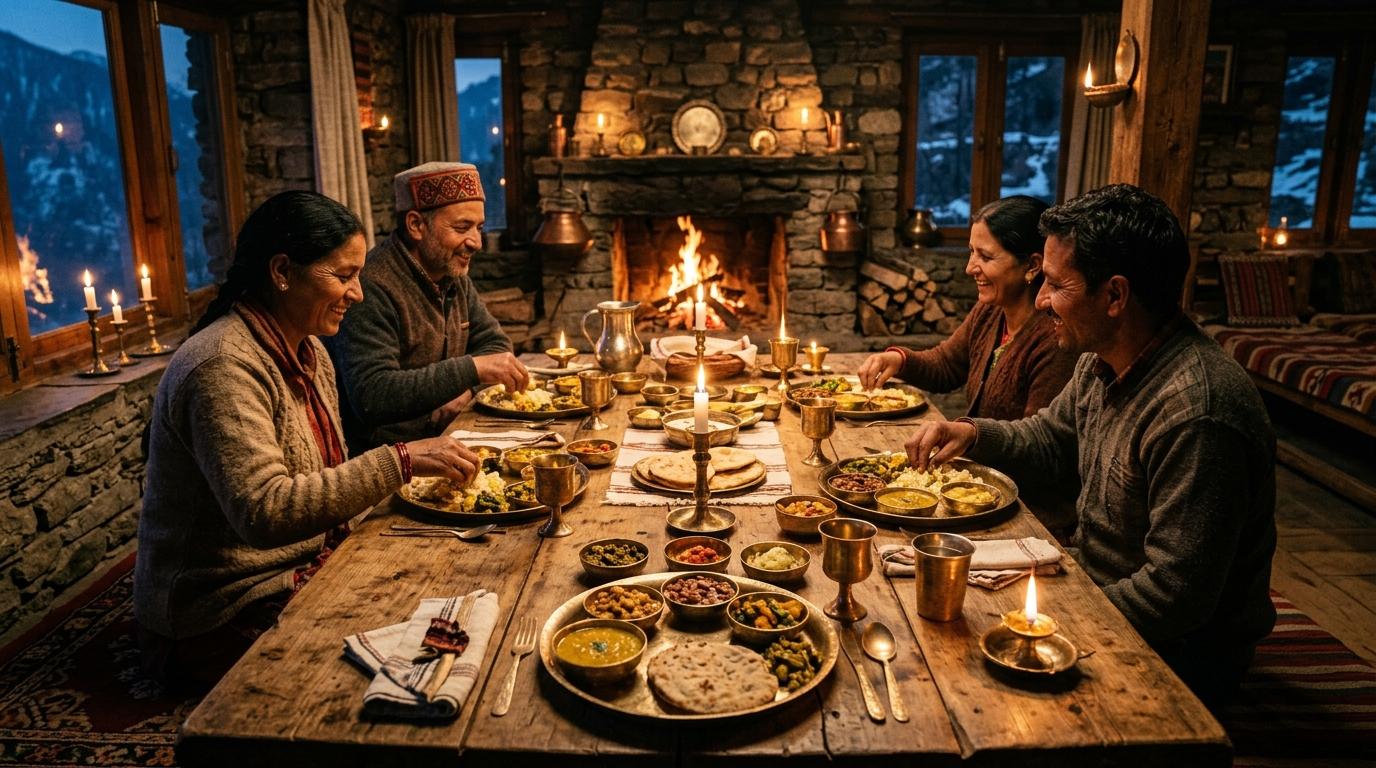
The traditional kitchen hearth where wild greens, fresh siddu, and stews simmer over flame.
04Bukhari & The Hearth

Fire

The living, crackling center of Himalayan domestic life.

In a mountain homestead at 2,180 metres, life convenes where the smoke rises. The cast-iron bukhari radiates steady, deep radiant heat that reaches through wool socks and thick cardigans.

At dusk, cedar cones crackle in the grate. A brass kettle of water with cinnamon, wild mint, and black tea simmers perpetually on the flat iron top. Around the hearth, travelers and valley locals sit side by side, sharing mountain folklore as the snow falls silently outside.

ApparatusTraditional cast-iron bukhari stove
FuelDry pinecones and deodar windfall scraps
FunctionRoom heating, boiling kettle, and communal anchor
Wool
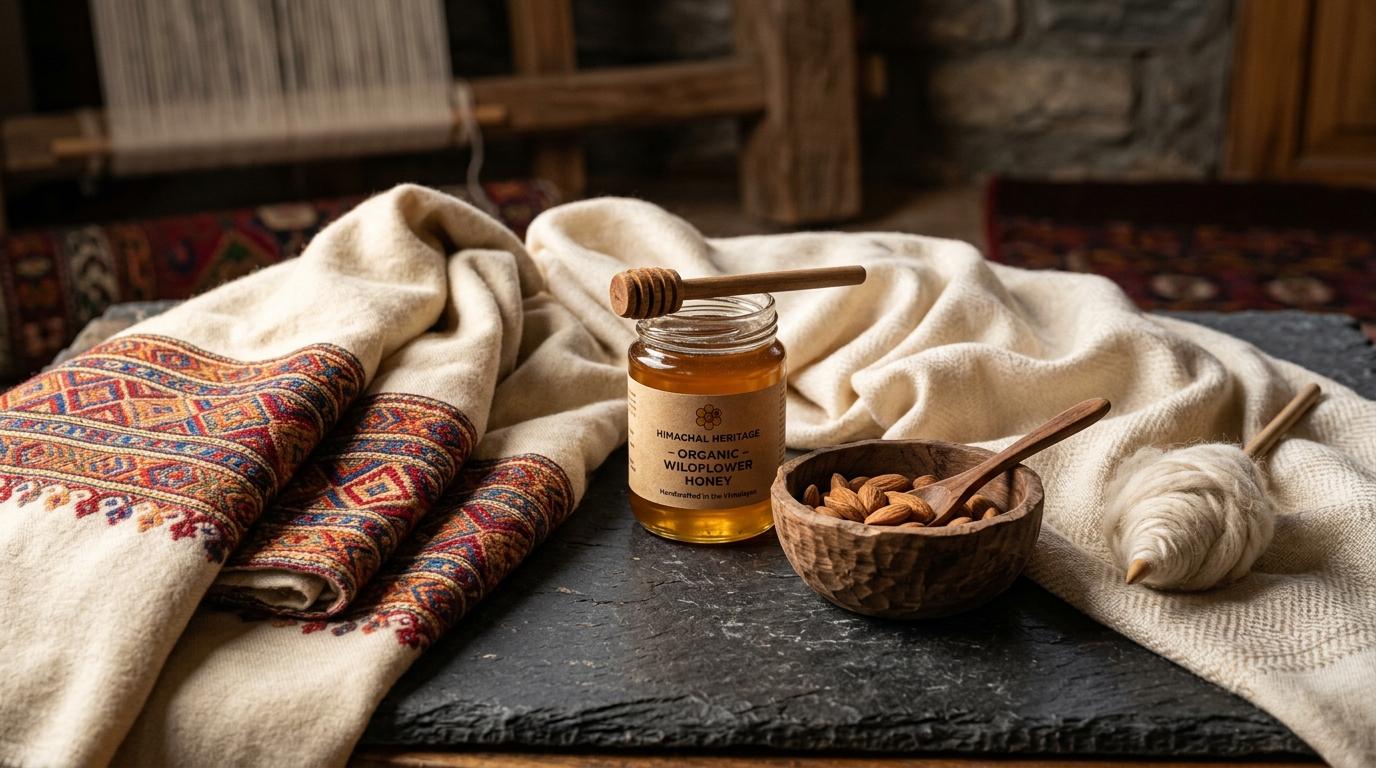
Hand-spun mountain pattu blanket with traditional valley geometric borders.
05Pattu & Desi Sheep Fleece

Wool

Spun by hand on mountain pit-looms for sub-zero nights.

Mountain beds require real weight. Every blanket at House of Hulda is an authentic Himachali pattu, sheared from local high-altitude sheep that graze above the treeline in summer.

Woven on ancestral wooden looms by women in Rumsu and Naggar, the wool retains its natural lanolin. It blocks cold drafts completely while allowing the body to breathe, ensuring deep, uninterrupted sleep even when the temperature drops to -8°C.

FleeceGaddi & Kinnauri indigenous sheep
WeaveHand-thrown shuttle loom with geometrical border
WeightDense high-micron wool, untreated and non-synthetic
Light
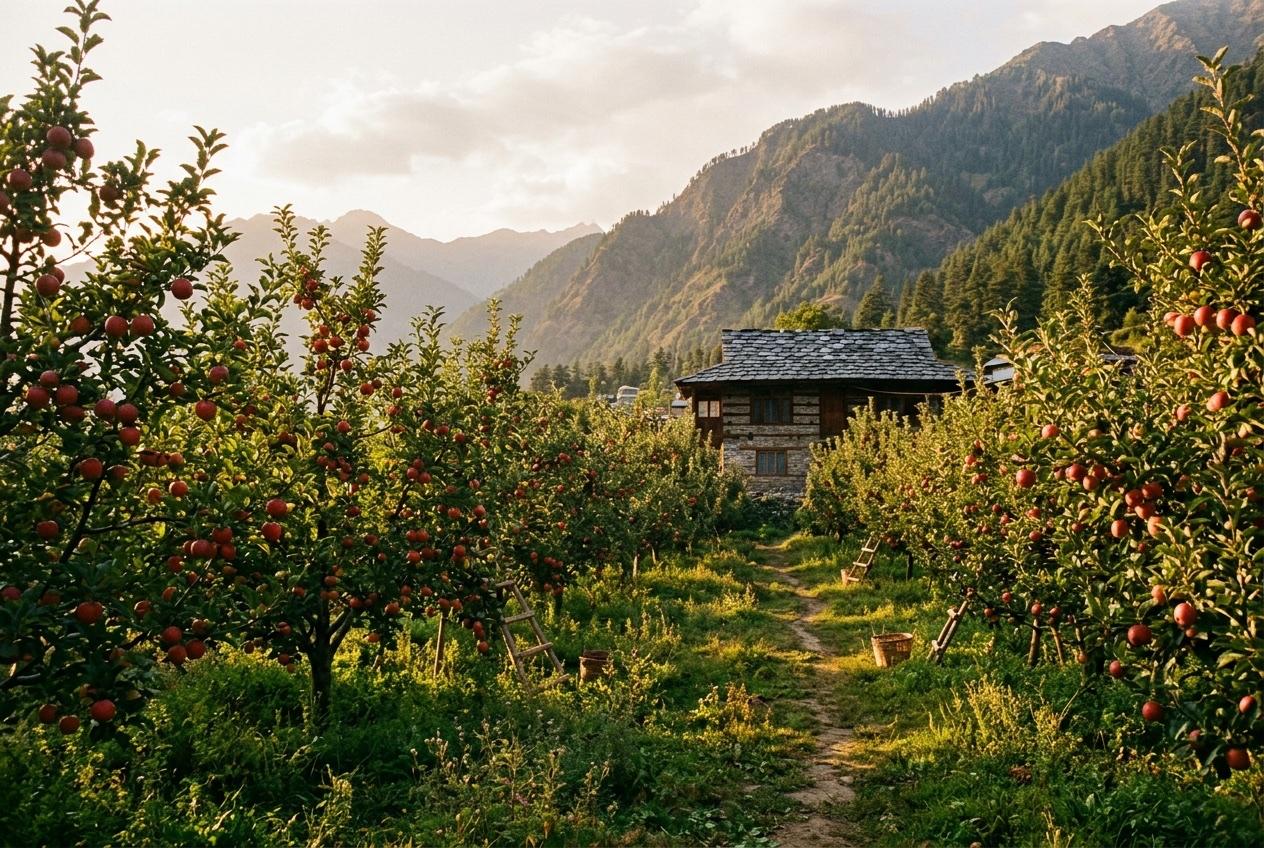
Morning light breaking through the apple orchard and illuminating the timber deck.
06Solar Geometry & Alpenglow

Light

Designed around the sun's trajectory across the valley.

House of Hulda is oriented precisely along the sun's winter arc. The first morning light crests the eastern ridge and pours into the bedrooms by 07:10, warming the mud plaster and greeting early risers.

By evening, recessed windows frame the glowing violet silhouette of the Dhauladhar range. At night, we keep electric lighting discreet and amber-toned, ensuring that when you step onto the terrace, your eyes are already adjusted to the cosmic sweep of the Milky Way.

OrientationSouth-Southeast facing slope
Window DesignRecessed timber casements framing snow peaks
Night IlluminationLow-kelvin warm lanterns protecting night vision
Experience The Craft

Sleep inside wood and stone that breathe.

Experience the natural quiet and warmth of traditional kath-kuni living. Reserve your room or book the entire home for your residency.